


We commonly think of diet in relation to our weight, energy levels, and heart health. But the everyday foods and drinks we consume also impact our oral tissues in often unnoticed ways. The inside of the mouth contains sensitive tissues that, over time, are affected by foods, drinks, and even our habits, thereby influencing our overall risk profile.
Oral cancer is not an acute condition; it tends to develop and grow over years through an accumulation of different lifestyle risk factors. Along with tobacco and alcohol use, your food and drink choices contribute to this profile. Examining these effects may enable you to develop more effective preventive practices before symptoms manifest.
The Link Between Oral Health and Diet
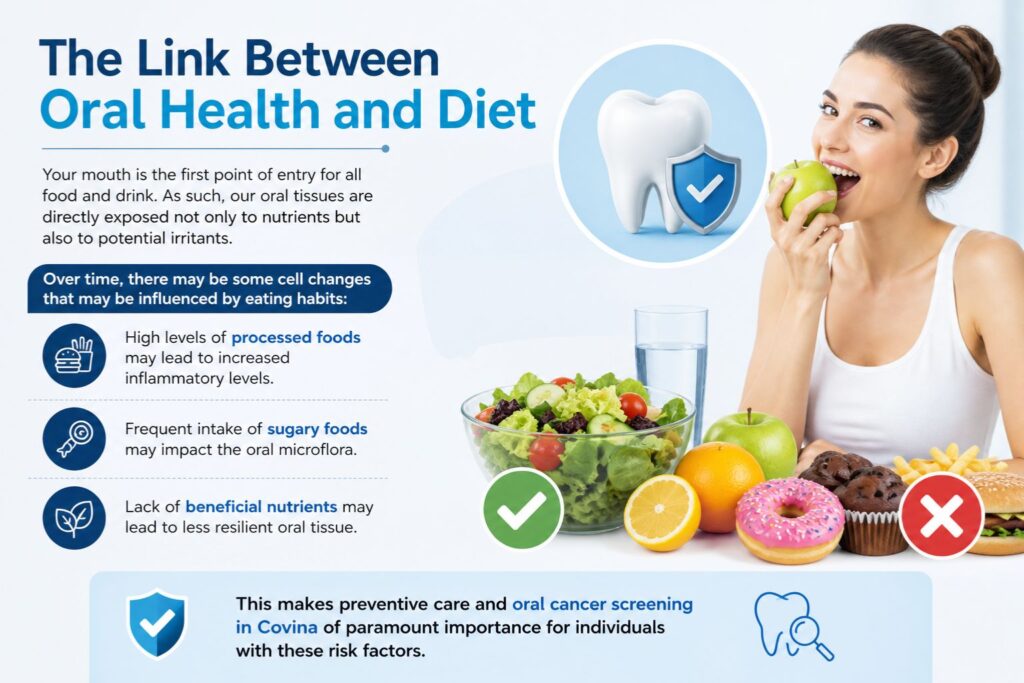
Your mouth is the first point of entry for all food and drink. As such, our oral tissues are directly exposed not only to nutrients but also to potential irritants.
Over time, there may be some cell changes that may be influenced by eating habits:
- High levels of processed foods may lead to increased inflammatory levels.
- Frequent intake of sugary foods may impact the oral microflora.
- Lack of beneficial nutrients may lead to less resilient oral tissue.
- This makes preventive care and oral cancer screening in Covina of paramount importance for individuals with these risk factors.
Foods That May Raise Oral Cancer Risk
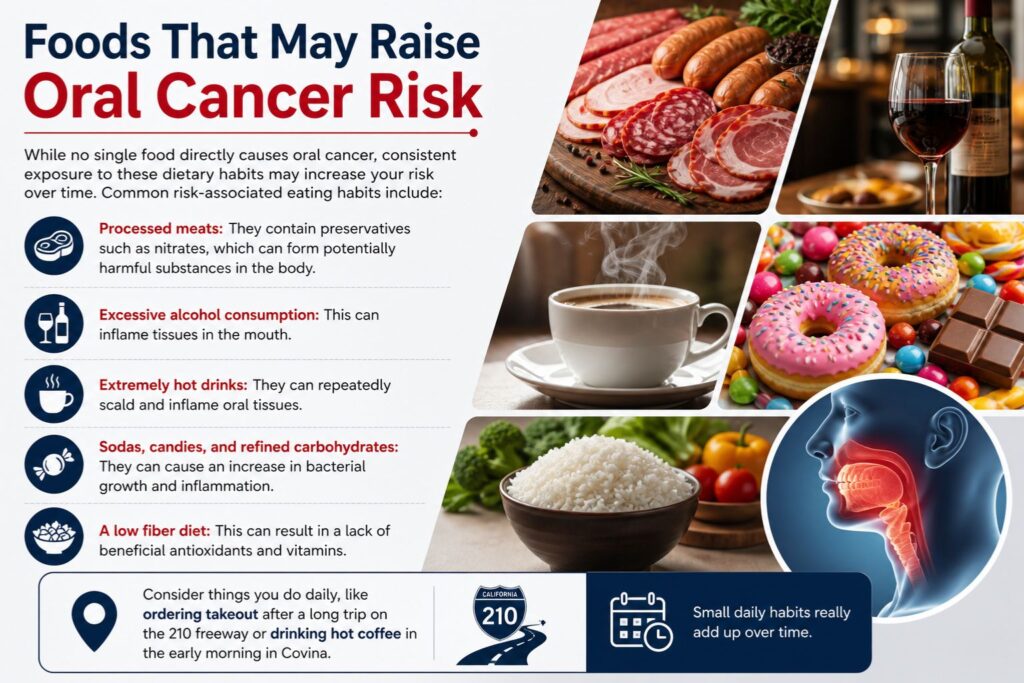
While no single food directly causes oral cancer, consistent exposure to these dietary habits may increase your risk over time. Common risk-associated eating habits include:
- Processed meats: They contain preservatives such as nitrates, which can form potentially harmful substances in the body.
- Excessive alcohol consumption: This can inflame tissues in the mouth.
- Extremely hot drinks: They can repeatedly scald and inflame oral tissues.
- Sodas, candies, and refined carbohydrates: They can cause an increase in bacterial growth and inflammation.
- A low fiber diet: This can result in a lack of beneficial antioxidants and vitamins.
Consider things you do daily, like ordering takeout after a long trip on the 210 freeway or drinking hot coffee in the early morning in Covina. Small daily habits really add up over time.
Foods That Can Boost Healthier Oral Tissues
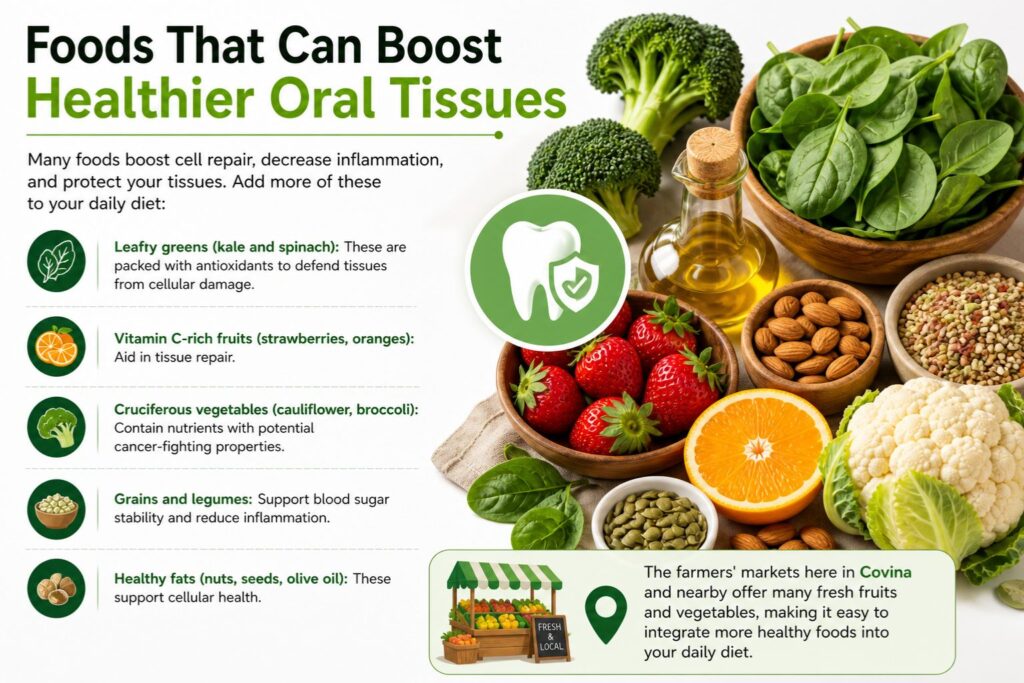
Many foods boost cell repair, decrease inflammation, and protect your tissues. Add more of these to your daily diet:
- Leafy greens (kale and spinach): These are packed with antioxidants to defend tissues from cellular damage.
- Vitamin C-rich fruits (strawberries, oranges): Aid in tissue repair.
- Cruciferous vegetables (cauliflower, broccoli): Contain nutrients with potential cancer-fighting properties.
- Grains and legumes: Support blood sugar stability and reduce inflammation.
- Healthy fats (nuts, seeds, olive oil): These support cellular health.
The farmers’ markets here in Covina and nearby offer many fresh fruits and vegetables, making it easy to integrate more healthy foods into your daily diet.
The Impact of Hydration and the Oral Environment
Your drinks have as much to do with your diet as your food does. A dry oral environment makes it easier for irritation and imbalanced bacteria to occur. Saliva plays a key role in:
- Rinses away food debris
- Balances acids
- Encourages healthy tissue
Practices which affect the dry oral environment:
- Frequent caffeine without water
- Alcohol
- Daily water consumption low
Drinking plenty of water, particularly during the heat of Southern California days, enhances your mouth’s defenses. Have a reusable water bottle at hand and fill it during your errands or walks. This may be an easier habit to start than cutting out caffeine.
Lifestyle Patterns That Increase Dietary Risk
Diet and oral cancer risk factors seldom occur in isolation. Oral cancer risk is amplified by the following practices and behaviors, interacting with what you eat. Combined oral cancer risk factors may be:
- Tobacco use and the consumption of alcohol.
- Poor diet and poor oral hygiene practices.
- Poor oral health and the presence of sharp, chipped, or ill-fitting teeth.
- Infrequent visits to your oral care provider and delayed cancer screenings.
An example could be the busy lifestyle of a long commuter whose diet consists of many convenience foods, which also influences how often they visit the dentist and their level of overall oral care. Being able to spot these trends allows you to start making changes in small, consistent, manageable ways.
Early Signs You Should Not Ignore
Oral cancer typically begins with minor changes within the mouth that can easily be overlooked, making your awareness of the warning signs a valuable one.
Look out for:
- Persistent mouth sores that do not heal
- Patches of red or white within the mouth
- Pain while chewing or swallowing
- Unexplained numbness in your lips or tongue
- A lump or a thickened area within the cheek
While these do not automatically mean a concern, they should never be ignored and will give you peace of mind to seek a health care professional.
Prevention Starts with Awareness and Consistency
Although it is ideal to follow a perfect diet to support your oral health, you do not necessarily have to; consistency and awareness in your diet will contribute to your overall wellness.
Examples of a more balanced routine could include: balancing out a meal of highly processed foods with fruits and vegetables, and keeping beverages from getting to the extreme temperatures of too hot, and making sure you are hydrated, as well as keeping alcoholic beverages down to a minimum and keeping a dental routine! Even changing things to the extreme, such as adding just one serving of vegetables to your meal, will make an improvement over time.
A Proactive Approach to Long-Term Oral Health
Daily food consumption will do far more than satisfy your appetite; it is essential to how your body reacts to various levels of stress, while supporting healing and keeping its tissues healthy. The diet you consume over time will certainly have an effect, and if not closely monitored, it can increase your risk factors. Making sure you stay aware of your food consumption is an easy way to control it for a healthier you.
At Covina Dental Studio, Dr. Paul Chung hopes to keep his patients ahead of potential concerns through comprehensive examinations and preventive care. Make an appointment, and you can receive the reassurance and guidance you require for years to come if any abnormal symptoms arise or if you have any concerns you wish to address.
Questions People Ask About Diet and Oral Cancer Risk
1. Can diet alone cause oral cancer?
Diet alone is rarely the sole cause of oral cancer. However, it can contribute to risk when combined with factors like tobacco use, alcohol consumption, and poor oral hygiene. A balanced diet helps support tissue health and may reduce the likelihood of long-term damage.
2. Are spicy foods harmful to oral tissues?
Spicy foods do not directly cause oral cancer. However, they may irritate sensitive tissues, especially if there are existing sores or inflammation. If you notice discomfort after eating spicy meals, it’s a good idea to monitor your symptoms and maintain a balanced diet.
3. How often should I get screened for oral cancer?
Screening frequency depends on your overall risk factors and health history. Many people benefit from routine evaluations during regular dental visits. If you have additional risk factors, more frequent screenings may be recommended to closely monitor for any changes.
4. Does drinking hot tea increase oral cancer risk?
Very hot beverages can cause repeated irritation to the tissues inside your mouth. Over time, this may increase sensitivity and vulnerability. Allowing drinks to cool slightly before consuming them is a simple way to reduce unnecessary thermal stress.
5. What vitamins are important for oral health?
Vitamins A, C, and E play a role in maintaining healthy oral tissues. These nutrients support cell repair and immune function. Including fruits, vegetables, and whole foods in your diet helps ensure your body consistently receives these essential nutrients.
6. Can early detection really make a difference?
Yes, early detection plays a significant role in outcomes. Identifying changes in the early stages enables timely intervention and improved management. Regular checkups and paying attention to unusual symptoms help ensure that any concerns are addressed as early as possible.