

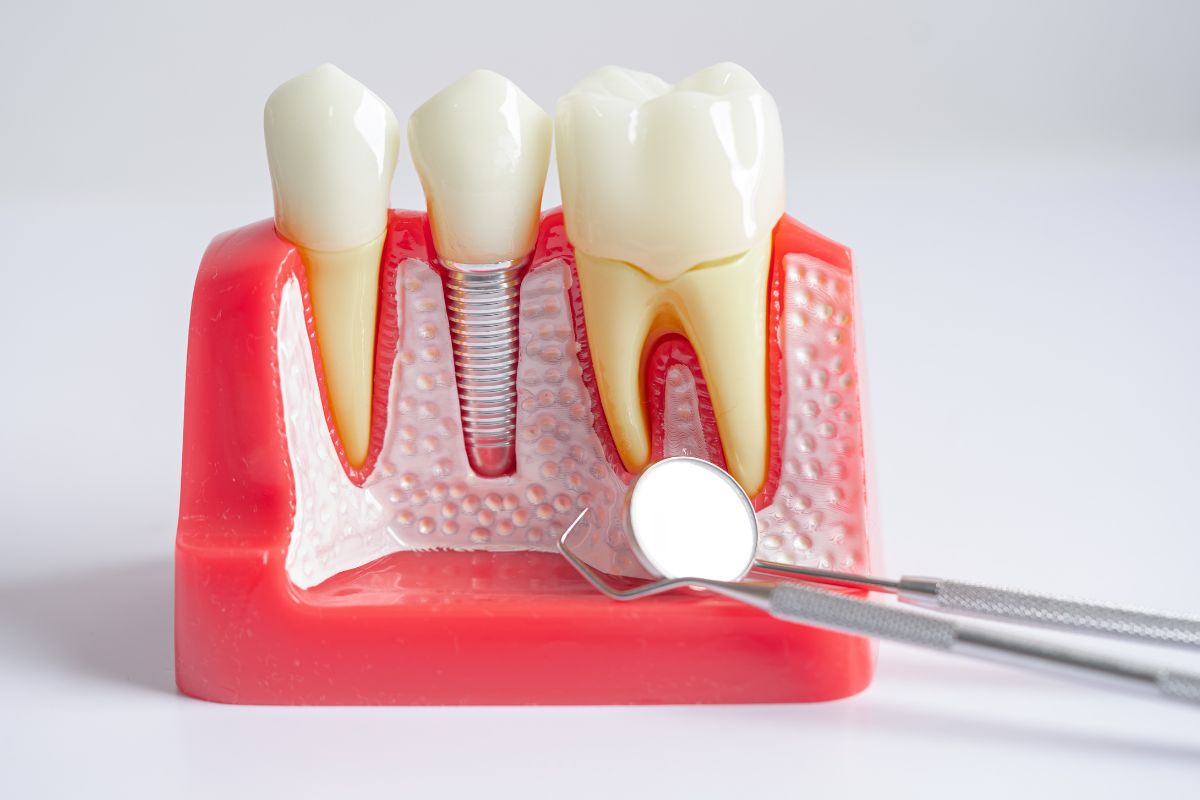
You just got your implant placed, and it’s quiet now, but now comes the important work. Healing is not passive; it’s an active process that involves protecting the site, allowing your body to work, and understanding what is normal. Most patients have concerns about what to expect during those first days and weeks.
There’s a clear progression through the healing stages of implant placement, and knowing what to expect can make the process of getting back to your everyday life after an implant feel far more controllable. Whether you’re considering dental implants in Covina or just curious about the recovery process, let’s look at what’s happening.
Day 1: Protecting the New Foundation
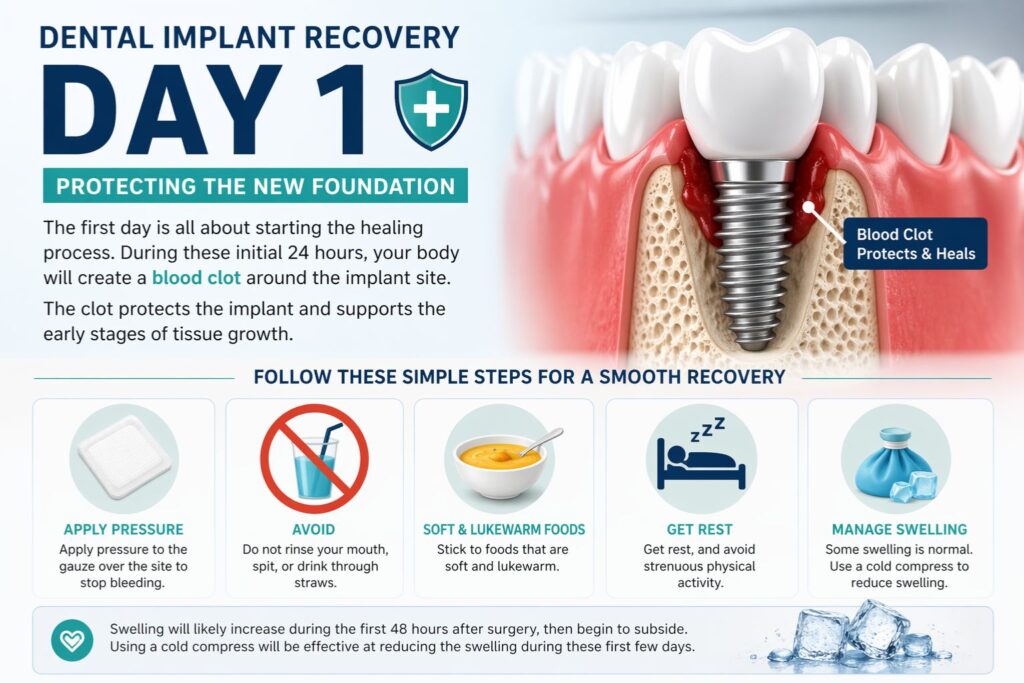
The first day is all about starting the healing process. During these initial 24 hours, your body will create a blood clot around the implant site.
The clot protects the dental implants in Covina and supports the early stages of tissue growth. Pay attention to these simple things during your first day of recovery:
- Apply pressure to the gauze over the site to stop bleeding
- Do not rinse your mouth, spit, or drink through straws
- Stick to foods that are soft and lukewarm
- Get rest, and avoid strenuous physical activity
Some initial discomfort or minor swelling is normal and to be expected. Swelling will likely increase during the first 48 hours after surgery, then begin to subside. Using a cold compress will be effective at reducing the swelling during these first few days.
Days 2-7: Managing Swelling and Early Healing
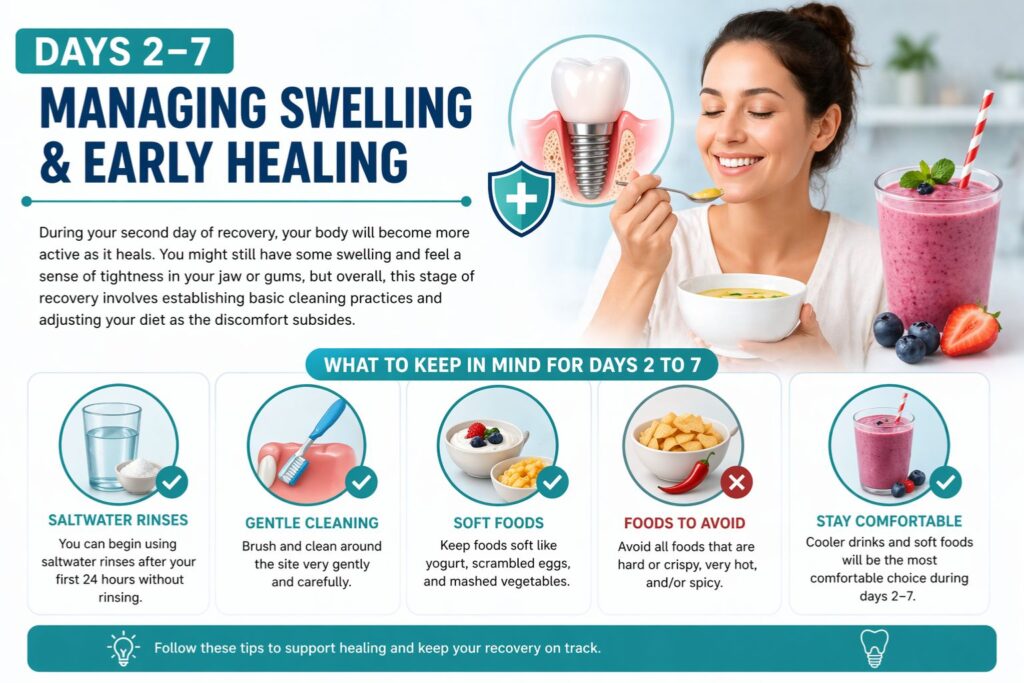
During your second day of recovery, your body will become more active as it heals. You might still have some swelling and feel a sense of tightness in your jaw or gums, but overall, this stage of recovery involves establishing basic cleaning practices and adjusting your diet as the discomfort subsides.
Here’s what to keep in mind for days 2 through 7:
- You can begin using saltwater rinses after your first 24 hours without rinsing.
- Brush and clean around the site very gently and carefully.
- Keep foods soft like yogurt, scrambled eggs, and mashed vegetables.
- Avoid all foods that are hard or crispy, very hot, and/or spicy.
If you’ve ever enjoyed a refreshingly cool smoothie on a hot afternoon through Covinador, a refreshing drink with a straw, you’ll appreciate that even cooler drinks with soft foods will be the most comfortable choice during days 2-7.
Weeks 2-6: Under the Surface, Quiet Work Continues
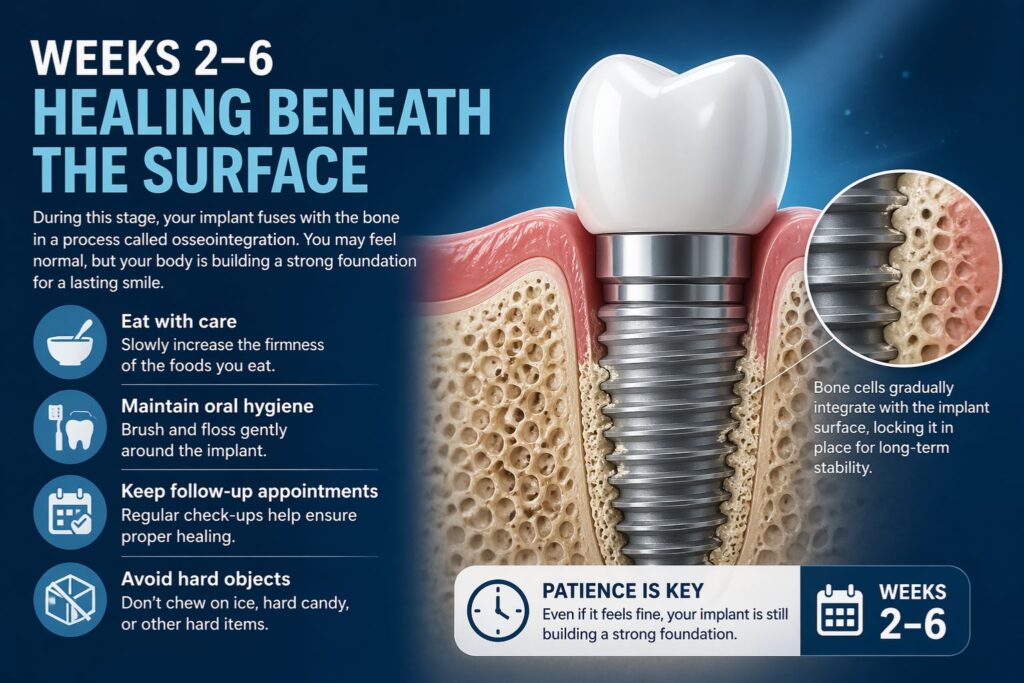
Here is where your healing may be less noticeable but more critical. Your implant will fuse with the bone-this is known as osseointegration.
You may feel as if you are back to yourself, but within your body, a solid base is developing. What to watch for:
- Slowly increase the firm texture of the foods you eat.
- Continue to brush and floss with care.
- Keep follow-up appointments.
- Resist the temptation to chew on ice or other hard objects.
Patience is a virtue at this stage. Even if it feels okay, your implant is still establishing a strong foundation.
What Can Impede Healing?
Everyone heals differently, and various factors can impact the speed and success of your recovery. Consider:
- Oral Hygiene: An exceptionally clean mouth will speed up the healing process.
- Smoking and Other Tobacco Products: Both can delay tissue healing.
- Existing Health Issues: Conditions like diabetes or an immune deficiency can affect your healing.
- Your Diet and Fluid Intake: A proper diet and staying hydrated provide nutrients essential for repair.
In an environment where we all lead active lives and enjoy an abundance of outdoor activities, it’s easy to forget that the body sometimes requires time and patience to fully heal.
Signs of Normal and Problematic Healing
Being aware of both healthy healing markers and warning signs can spare you unwanted anxiety.
Signs that you are healing normally:
- Mild pain and swelling.
- Some discoloration.
- A gradual decrease in soreness and swelling over a couple of days.
Signs you need to contact your doctor:
- Continued or worsening pain for several days.
- Excessive or continued bleeding.
- Fever or an abnormal discharge.
Your implant dentist will provide information on what to expect, but recognizing your body’s signals can be very helpful in responding to any issues that may arise.
Eating After Implant Surgery: What Works Best?
Nutrition plays a key role in the recovery process. Select food textures wisely to protect the implant and ensure your comfort:
Foods to eat:
- Smoothies (no straws!)
- Mashed veggies
- Scrambled eggs
- Oatmeal
Foods to avoid:
- Hard chips or nuts
- Chewy or sticky foods
- Very hot liquids
Most patients can get by with simple, homemade meals or perhaps light options from a nearby cafe during the first week after implant surgery.
Oral Care Without Disrupting Healing
While a clean mouth is imperative, make sure that hygiene is maintained gently. Simply:
- Brush any neighboring teeth as normal.
- Use a soft-bristle toothbrush.
- Do not place the brush or pressure directly on the implant.
- Rinse with warm salt water as recommended.
The important part here is the regularity, not the strength of brushing!
Returning to Daily Activities
Life will not be put entirely on hold following your implant, but you will likely need to moderate your day.
- Return to light activities within the first 24-48 hours.
- Refrain from strenuous exercise for a few days.
- Prioritize sufficient sleep.
If you were previously on daily walks, visiting the grocery store, or taking public transport, work your way up gradually! Your own body will let you know.
How Long Until Full Recovery?
Recovery times vary significantly but typically break down into these stages:
- Initial healing: 1-2 weeks.
- Bone osseointegration: 3-6 months.
- Placement of definitive restoration: Once integration is complete.
Trust that the process takes time to produce optimal results.
A Better Recovery Begins with an Effective Plan
Dental implant recovery is relatively simple, but it does involve awareness and diligence. Everything you do, from your food choices to your oral hygiene habits, will directly impact the results you achieve.
If you are considering dental implants in Covina, being aware of the procedures you will undergo can help you mentally and physically prepare for a less arduous recovery period.
Ready for a Stronger, Healthier Smile?
Recovery is a collaborative process between you and your dentist or surgeon. When you are guided correctly, the recovery process may feel predictable and manageable, as each phase brings you closer to achieving a long-lasting solution that restores function and comfort.
At Covina Dental Studio, our implant dentists take meticulous planning and clear communication into account when helping you prepare for the process. If you are prepared for implant placement, contact Covina Dental Studio to schedule a consultation today.
Questions People Ask About Dental Implants
1. How long does it take to heal after dental implant surgery?
Initial healing usually takes one to two weeks, while full integration with the bone can take several months. The timeline varies depending on your health, the number of implants, and how well you follow aftercare instructions. Regular follow-ups help ensure proper progress throughout recovery.
2. Is swelling normal after implant placement?
Yes, mild swelling is common and typically peaks within 48 hours. It should gradually reduce over the next few days. Using a cold compress and resting can help manage it. If swelling worsens or lasts longer than expected, it’s best to consult your provider.
3. When can I return to normal eating habits?
You can start with soft foods immediately after the procedure and slowly reintroduce firmer foods over the next few weeks. Avoid hard or crunchy items until your provider confirms it’s safe. Gradual progression helps protect the implant during early healing stages.
4. Can I brush my teeth after implant surgery?
Yes, but you should avoid the implant site for the first few days. Use a soft-bristled toothbrush and gently clean the surrounding teeth. Keeping your mouth clean is important, but being careful around the surgical area helps prevent irritation or disruption.
5. What should I avoid during recovery?
Avoid smoking, alcohol, hard foods, and intense physical activity during the early healing phase. These factors can delay recovery or interfere with implant stability. Following your aftercare instructions closely helps reduce risks and supports proper healing.
6. How do I know if my implant is healing properly?
Healthy healing includes reduced swelling, minimal discomfort, and no unusual symptoms. If you notice severe pain, persistent bleeding, or signs of infection, contact your provider. Regular check-ups ensure your implant is integrating as expected and healing is on track.